apps/site
Storefront
The customers’ shop
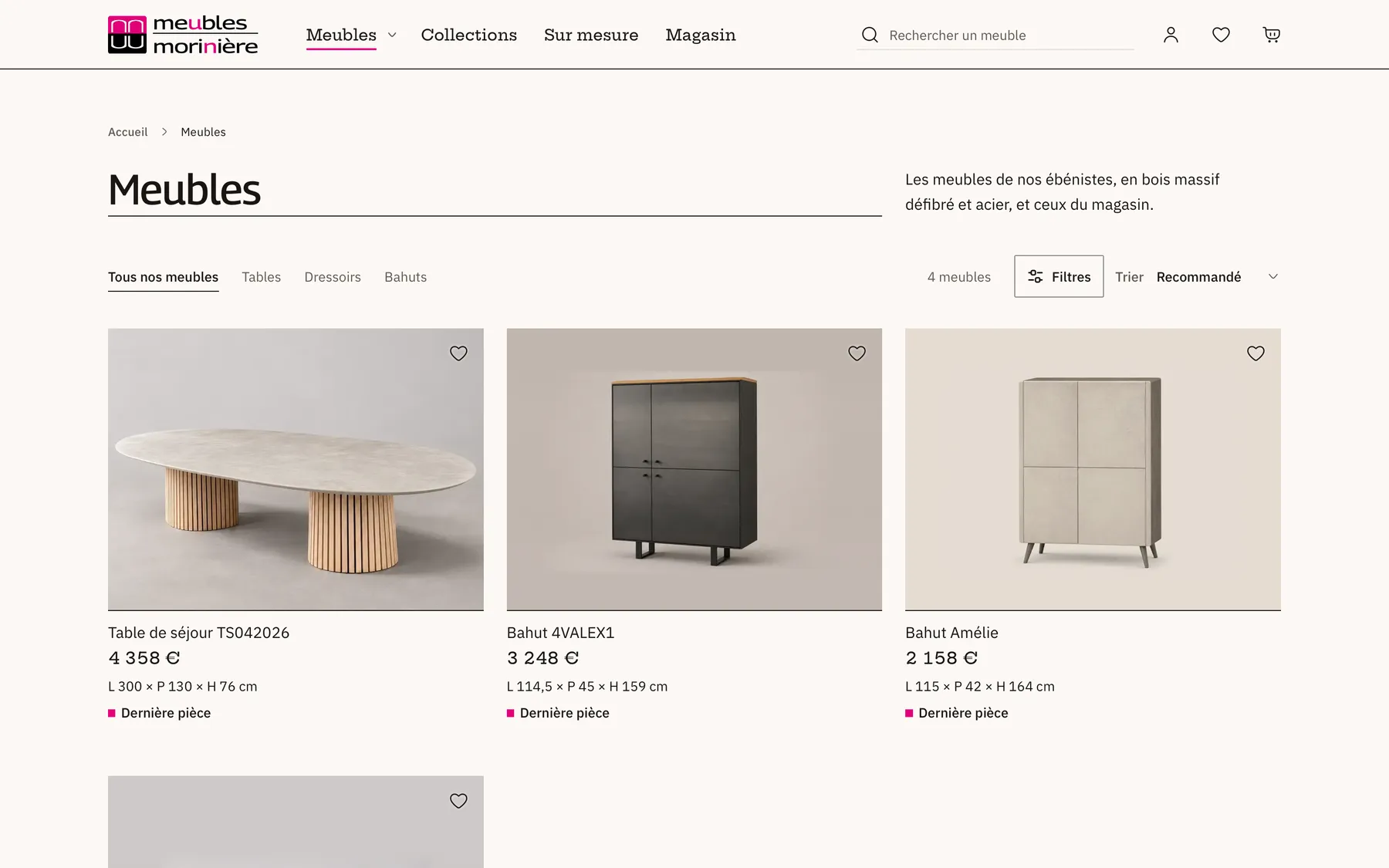
- Catalogue, search, collections, favourites
- Product page with availability and delivery date
- Cart and Stripe checkout
- Quotes viewable and payable online
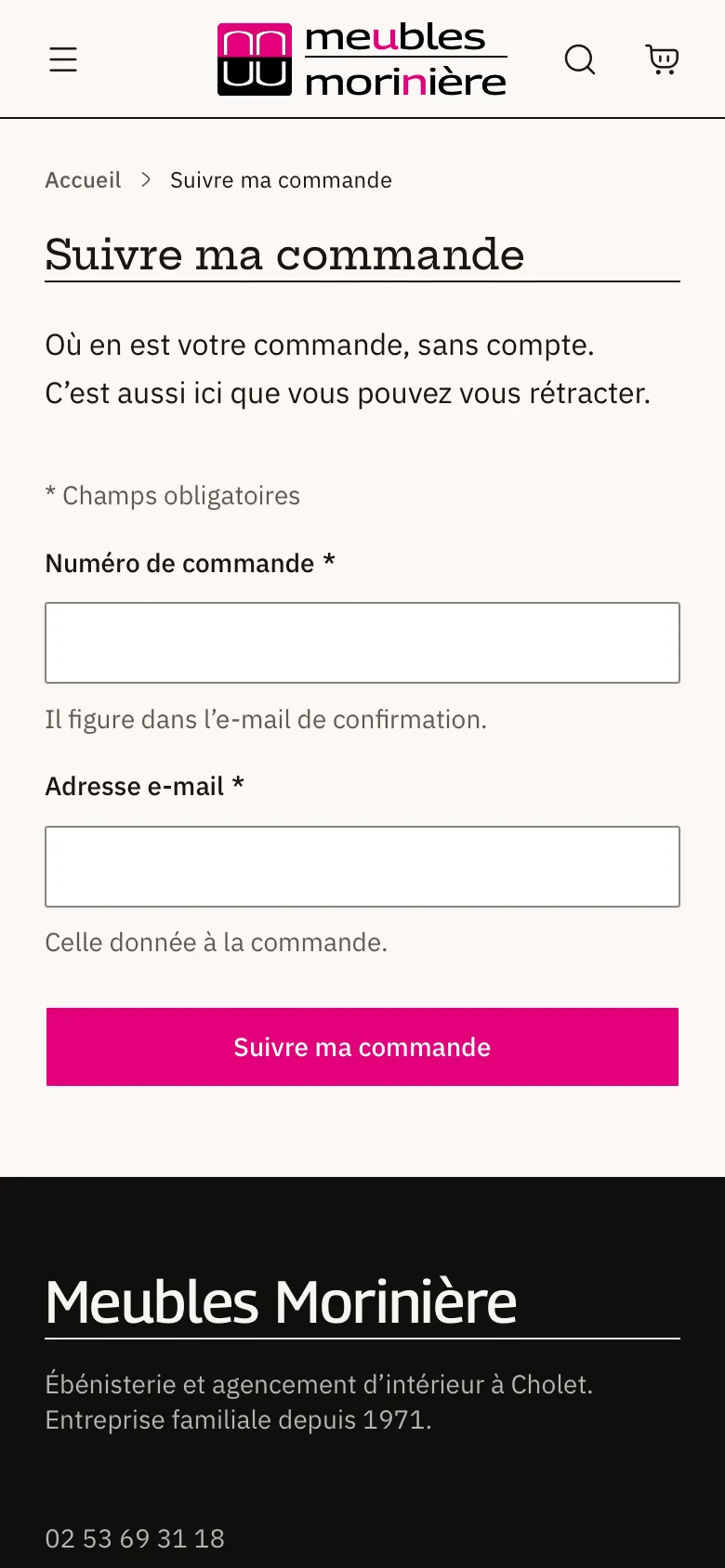
- Order tracking, optional account
- Online withdrawal
Business software · Cholet, France, since 1971
Meubles Morinière makes custom furniture in its Cholet workshop and sells it in its own store. Its software ties the workshop, the store and online sales together. The team has its ERP, customers have their storefront, and both share the same database. So a sale online, in the store or from a quote is the same order, and the team follows it through to the invoice.
A project led solo, with Claude Code, by Adrien Poirier, full-stack software developer. I am looking for a role in a product team, in Nantes or Montréal, from March 2027. Contact me
ERP
The tool the team uses for sales, the workshop, purchasing, stock, the catalogue and accounting.
Storefront
The shop where customers choose and track their order. Online payment will open once the terms of sale are final.
Fisher
The ERP’s assistant. It reads documents and answers from the ERP’s data.
01Context
Meubles Morinière’s cabinetmakers have built their furniture on site in Cholet, in western France, since 1971. They work in solid wood and steel, to measure or from their own designs. The store shows their pieces alongside furniture, lighting and decor bought from Italian, Spanish and French makers.
The team is small. The same people sell, write quotes, order from suppliers, build, deliver and keep the books. The software is made for them and for their customers.
02The problem
A till, an online shop and a spreadsheet would each cover part of it. The real problem is what happens between those tools.
03Goals
Enter data only once
Once it’s entered, data is used everywhere: in the ERP, on the storefront, in emails and in PDFs.
Only promise what the store can deliver
The price, availability and date shown on the storefront come from the rule the workshop applies. Customers pay what they saw.
Let the database protect obligations
Anything that touches money, the law or stock is protected by the database itself.
Make life easier for a small team
The ERP is fast, it works on a phone, and every morning it flags what needs a look.
04Users
ERP
The team
They use it in the store, in the workshop, for purchasing and accounts, on a computer and on a phone. Everyone has the same rights. In a small team everyone has to be able to do everything, so the screens are organized by trade.
Storefront
Customers
They choose, track their order and can withdraw. Paying online and accepting a quote will open once the terms of sale are final. The account is optional, and you sign in without a password.
The accountant gets the fiscal-year export. The ERP prepares it along with the VAT returns.
Read the full overview05The product
apps/site
The customers’ shop
Postgres
Each application has its own role
moriniere_siteownerThe ERP owns it. The storefront only has the rights it needs, table by table and column by column.
The storefront’s roleapps/erp
The team’s tool
Stripe → ERP
Stripe confirms payments to the ERP only, by webhook.
ERP → Storefront
A write invalidates the cache of the affected pages.
Storefront → ERP
The storefront sends withdrawals and account deletions as signed events.
06On screen
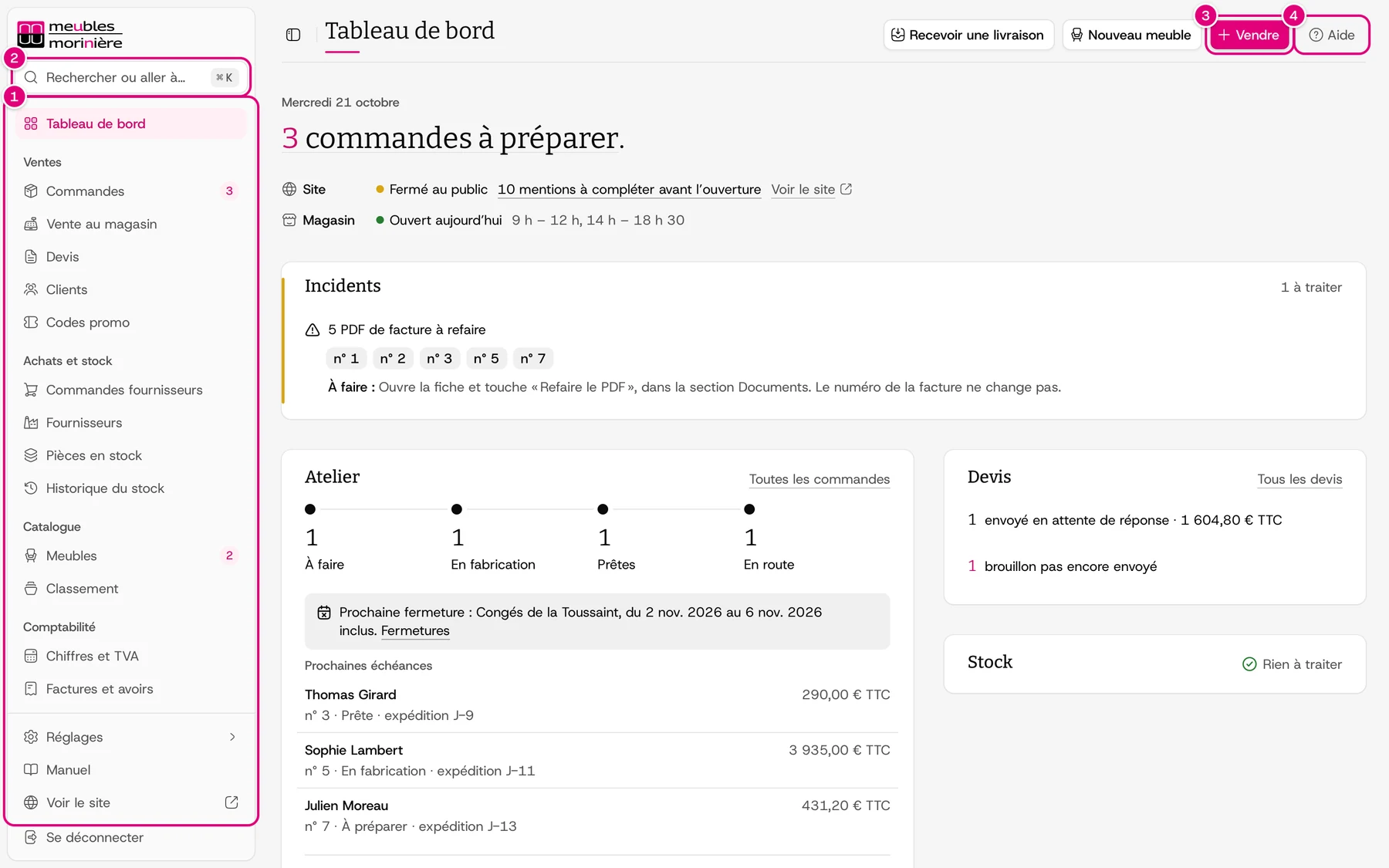
These screenshots show everyday tasks. The storefront is captured as it is live, and the ERP as the team’s manual shows it, on demo data.
Storefront
From the front page to order tracking, as customers see it.
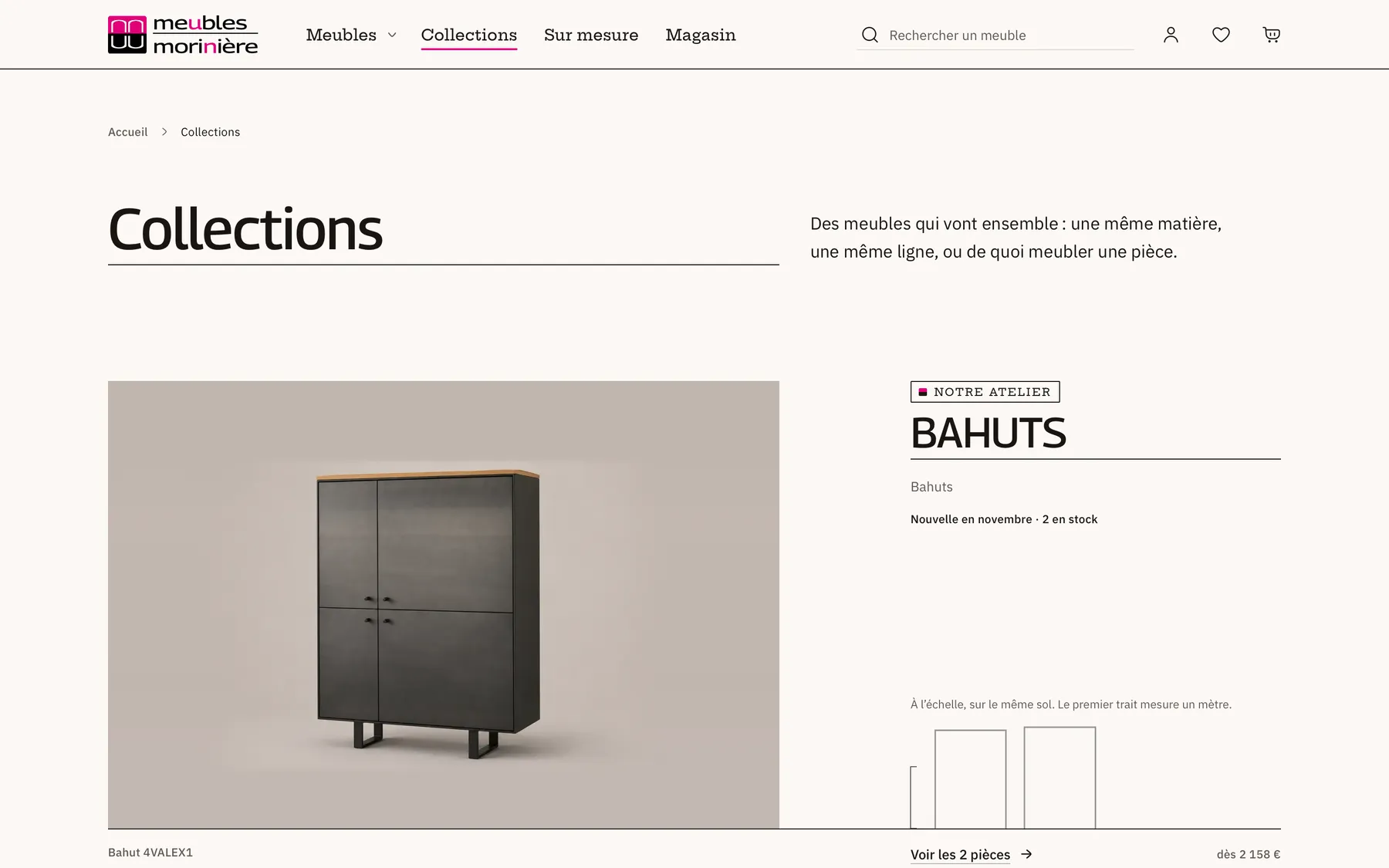
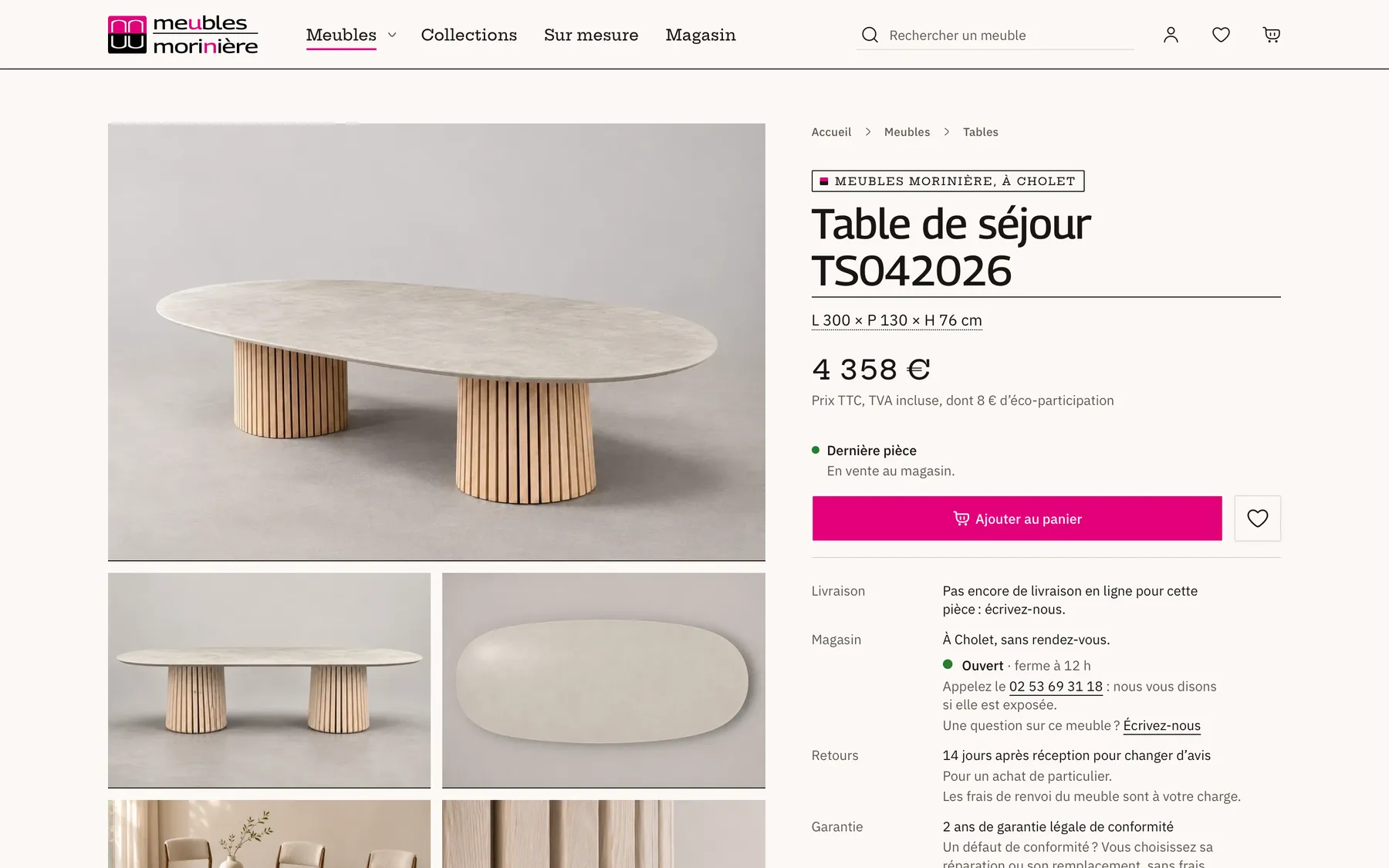
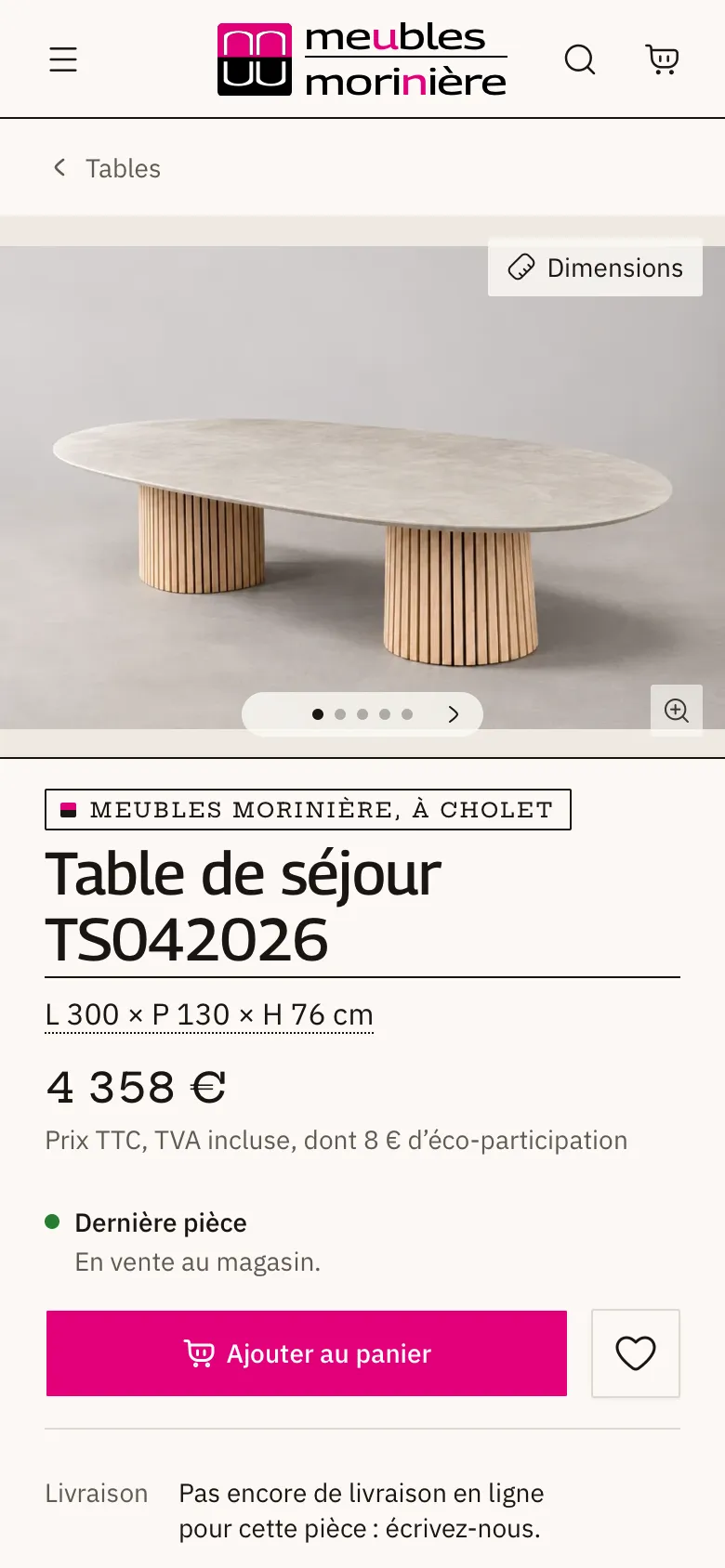
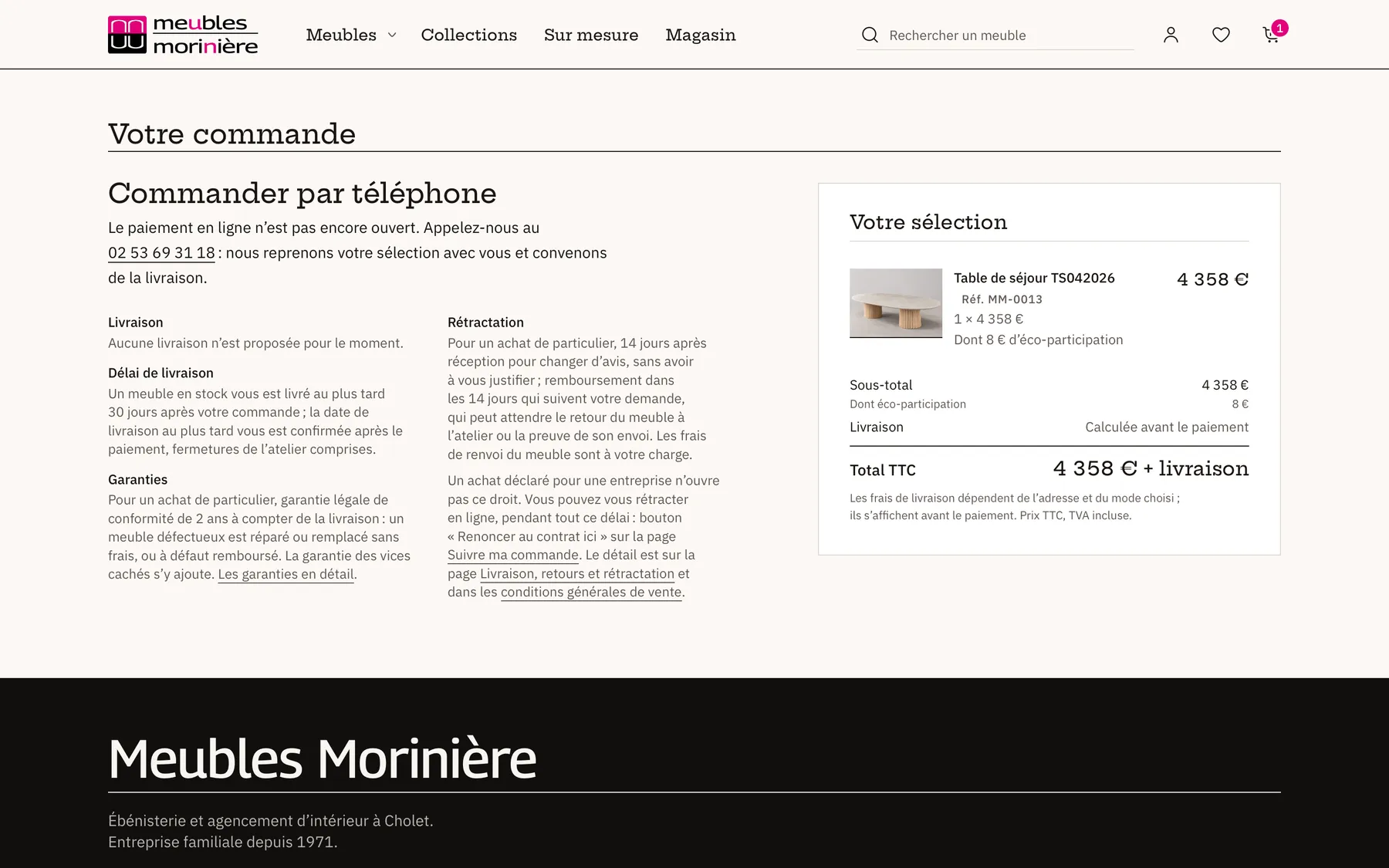
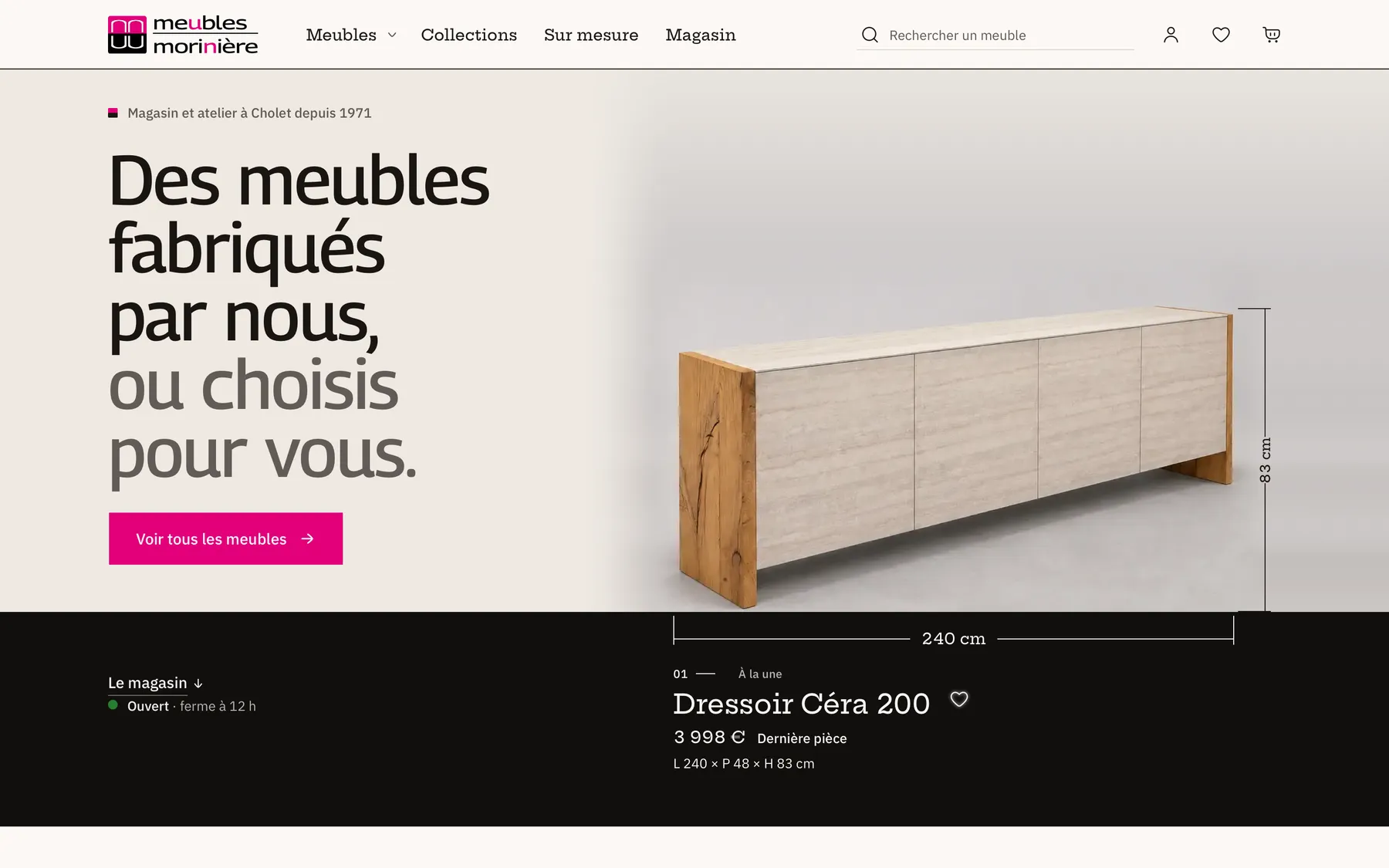
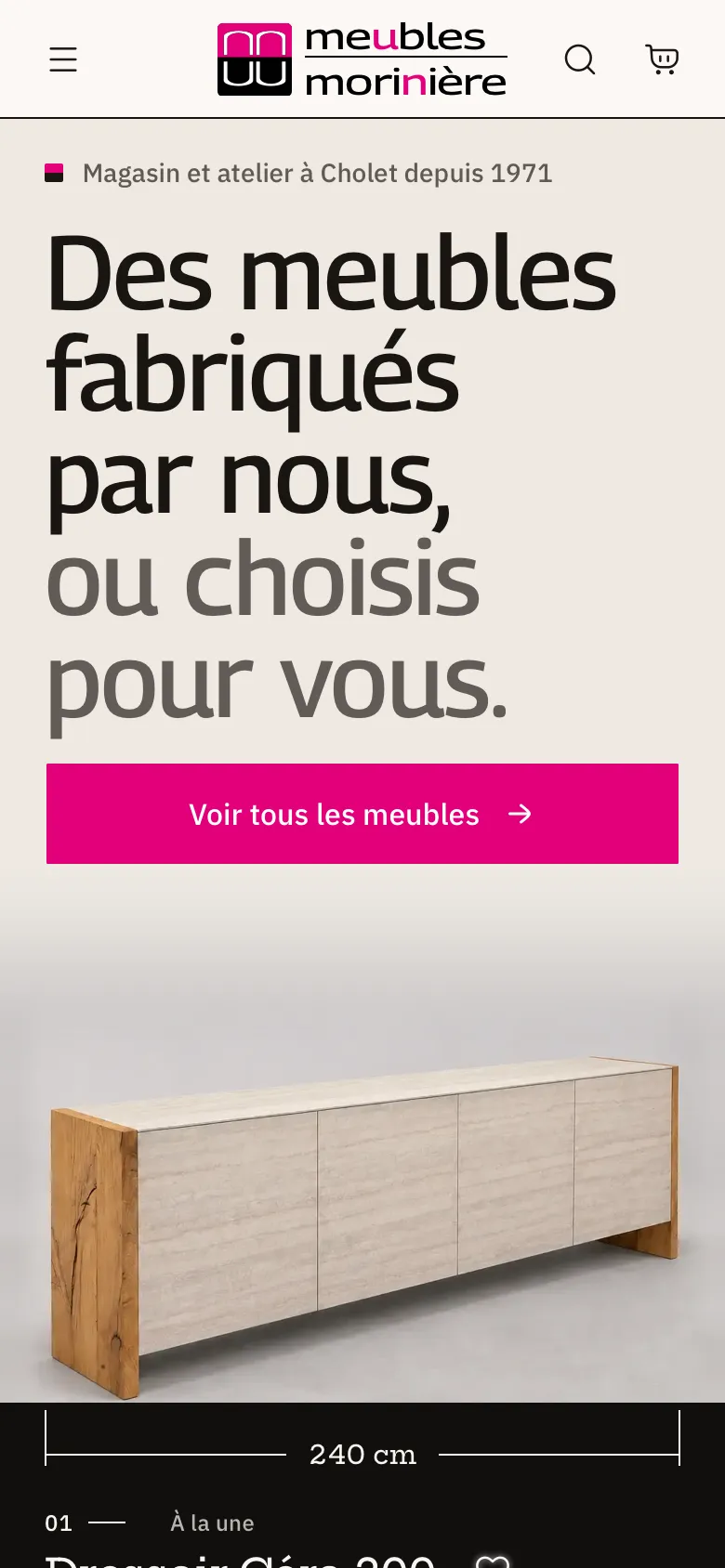
Home. The front page shows a workshop piece with its dimensions, price and availability, and whether the store is open.
The live storefront, captured read-only.
07The journey
An order goes through eight steps across the two applications. Each step links to the page that describes it in the code.
08Under the hood
It’s a pnpm monorepo with two Next.js applications and shared packages. The guarantees don’t depend on anyone’s discipline, because the database or the code enforces them.
The project has no hosted CI. Before a commit reaches production, the pre-push hook checks it in a detached worktree (types, lint, tests, Postgres checks). Quality
Where to start
Go deeper
What is it, and who built it?
What does the software do?
How is it built?
Why is it built this way?
Contact
I led this project on my own, from analysing the business to running it in production, with AI as leverage and engineering as the standard. The repository is private, but I’m happy to walk through the code in an interview.
How I build with AIAdrien Poirier
Full-stack software developer
I am looking for a role in a product team, in Nantes or Montréal, from March 2027. I have six years of industry experience, four of them in software development. Since 2022 I have been building a Next.js traceability application as part of a team.